
19 Aug 2026
Dengue fever is a mosquito-borne viral infection that can become life-threatening if warning signs are ignored or treatment is delayed. Recognizing the early symptoms of dengue, monitoring warning signs, and seeking timely medical care are essential for preventing complications and ensuring a safe recovery.
During the monsoon season, mosquito-borne illnesses become more common across Kerala, and dengue fever remains one of the significant health concerns. While many people recover with proper medical care and adequate hydration, dengue can become serious if warning signs are overlooked or treatment is delayed.
At Aabind Hospital, Palakkad, experienced physicians provide timely diagnosis, close monitoring, and comprehensive treatment for dengue fever to help patients recover safely.
Dengue is a viral infection transmitted by the bite of an infected Aedes mosquito. There is no antiviral medicine that cures dengue directly. Treatment focuses on managing symptoms, preventing dehydration, and closely monitoring blood parameters such as platelet count and haematocrit until the virus runs its course, which is usually 7 to 10 days. For most people, dengue is uncomfortable but self-limiting.
In a smaller number of cases, dengue can progress to dengue haemorrhagic fever or dengue shock syndrome, both of which are medical emergencies. Early diagnosis and close monitoring can help identify complications before they become severe.
Dengue typically begins 4 to 10 days after an infected mosquito bite. The early symptoms can initially resemble other monsoon-related illnesses.
At this stage, most patients can be managed with rest, fluids, and monitoring. A dengue NS1 antigen test or dengue IgM/IgG test may be recommended by a doctor to confirm the infection and establish a baseline for monitoring platelet levels and other blood parameters.
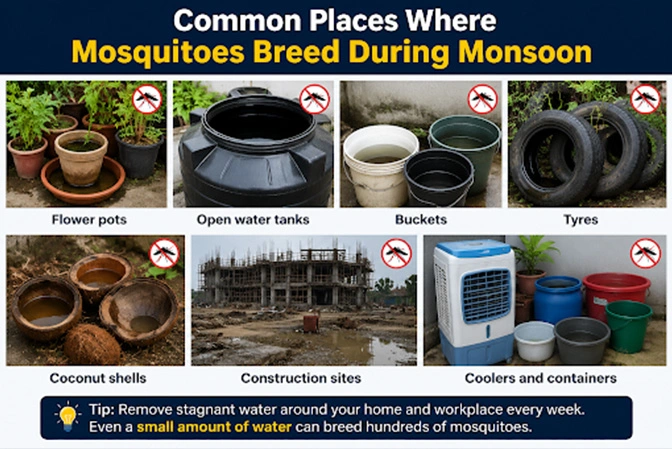
The rainy season creates favourable breeding conditions for mosquitoes because stagnant water can accumulate in various places around homes, workplaces, and construction areas.
Most dengue infections improve within a week. However, some patients may develop severe dengue, which requires urgent hospital care.
Seek immediate medical attention if you notice:
These symptoms may indicate severe dengue, plasma leakage, or internal bleeding and should never be ignored.
| Stage | What It Looks Like | What to Do |
|---|---|---|
| Day 1–3: Febrile Phase | High fever, headache, body pain, muscle and joint pain, and mild rash. | Get an NS1 antigen or dengue test, stay well hydrated, rest, and monitor temperature and platelet count under your doctor’s guidance. |
| Day 3–7: Critical Phase | Fever may reduce, but severe abdominal pain, persistent vomiting, bleeding, restlessness, or breathing difficulty may develop. | Seek immediate hospital care. This is the highest-risk stage when dengue complications can occur. |
| Day 7 Onward: Recovery Phase | Fever resolves, appetite returns, energy improves, and platelet count gradually increases. | Continue follow-up blood tests as advised, maintain hydration and nutrition, and attend follow-up appointments until your doctor confirms recovery. |
Diagnosis combines clinical evaluation with blood tests. An NS1 antigen test can detect dengue within the first 1–5 days of fever, while IgM/IgG antibody tests are generally more useful after day 5.
Doctors may also monitor platelet count, haematocrit (PCV), and white blood cell count. The trend in these blood parameters, rather than a single reading, can help doctors assess how the illness is progressing.
There is currently no specific antiviral medicine available to cure dengue. Treatment focuses on supporting the body’s recovery while preventing dehydration and other complications.
Maintaining adequate hydration is an important part of dengue care. Depending on the patient’s condition, doctors may recommend:
Proper hydration helps maintain blood circulation and may reduce the risk of complications such as dengue shock syndrome.
Doctors generally recommend paracetamol for managing fever and body pain when appropriate.
Patients with dengue should avoid medicines such as:
These medicines may increase the risk of bleeding and should not be taken for dengue unless specifically advised by a healthcare professional.
Patients admitted to the hospital may receive close monitoring of:
If warning signs develop, prompt medical intervention and close monitoring are essential to reduce the risk of serious complications.
Most patients begin recovering within 7 to 10 days, although weakness and tiredness can continue for several weeks.
During recovery:
Do not return to work or school until your physician confirms that you have recovered sufficiently.
Preventing mosquito bites remains the most effective way to reduce the risk of dengue infection.
Simple preventive measures include:
Even a small amount of standing water can become a breeding ground for mosquitoes.
Early diagnosis and expert medical care can significantly reduce the risk of severe dengue complications. At Aabind Hospital, Palakkad, comprehensive dengue care includes:
Our focus is on early detection, continuous monitoring, evidence-based treatment, and personalised care to help patients recover safely.
Dengue fever can become serious if it is not diagnosed and managed promptly. Recognizing the symptoms, monitoring warning signs, and seeking timely medical care are essential to prevent complications and support a safe recovery.
If you or a loved one develops symptoms of dengue, consult the experienced physicians at Aabind Hospital, Palakkad for accurate diagnosis, expert treatment, and comprehensive care. Early medical attention can make an important difference in managing dengue safely.
No. Dengue does not spread from one person to another through direct contact. It spreads through the bite of an infected Aedes mosquito.
Yes. There are four different dengue virus serotypes: DENV-1, DENV-2, DENV-3, and DENV-4. Infection with one serotype provides lifelong immunity only to that type, so a person can get dengue again from a different serotype.
People at higher risk include infants, older adults, pregnant women, individuals with weakened immunity, and people with chronic conditions such as diabetes, kidney disease, or heart disease. People who have had dengue before may also have a higher risk of severe disease.
Yes. Children of all ages can develop dengue. Symptoms may be less specific than in adults, so parents should seek medical attention if a child has a high fever, poor feeding, unusual sleepiness, persistent vomiting, or signs of dehydration.
Yes. Dengue during pregnancy requires prompt medical evaluation because it may increase the risk of complications for both the mother and baby. Pregnant women with suspected dengue should seek immediate medical care.
No. Dengue is caused by a virus, so antibiotics do not treat dengue unless a separate bacterial infection has been diagnosed by a doctor.
Platelet transfusions are recommended only in selected patients with severe bleeding or other specific medical indications. A low platelet count alone is usually not a reason for platelet transfusion.
It is best to return only after your doctor confirms recovery. Although fever usually resolves within a week, fatigue and weakness can persist for several weeks.
Protect other family members from mosquito bites by using mosquito nets, repellents, and eliminating mosquito breeding sites. Although dengue is not directly contagious, mosquitoes can spread the virus from an infected person to others.
If you experience symptoms of dengue or develop warning signs, consult the experienced physicians at Aabind Hospital, Palakkad, for timely diagnosis, laboratory testing, supportive treatment, and continuous monitoring.
Experiencing dengue symptoms? Don’t wait for them to worsen. Visit Aabind Hospital, Palakkad, for prompt diagnosis, expert treatment, and comprehensive dengue care.
Book your consultation today or visit our Emergency Department for immediate medical attention.
